


NFPA requirements for dust collectors: get the compliance checklist
Designing a dust collection system that meets NFPA requirements doesn’t have to be complicated.
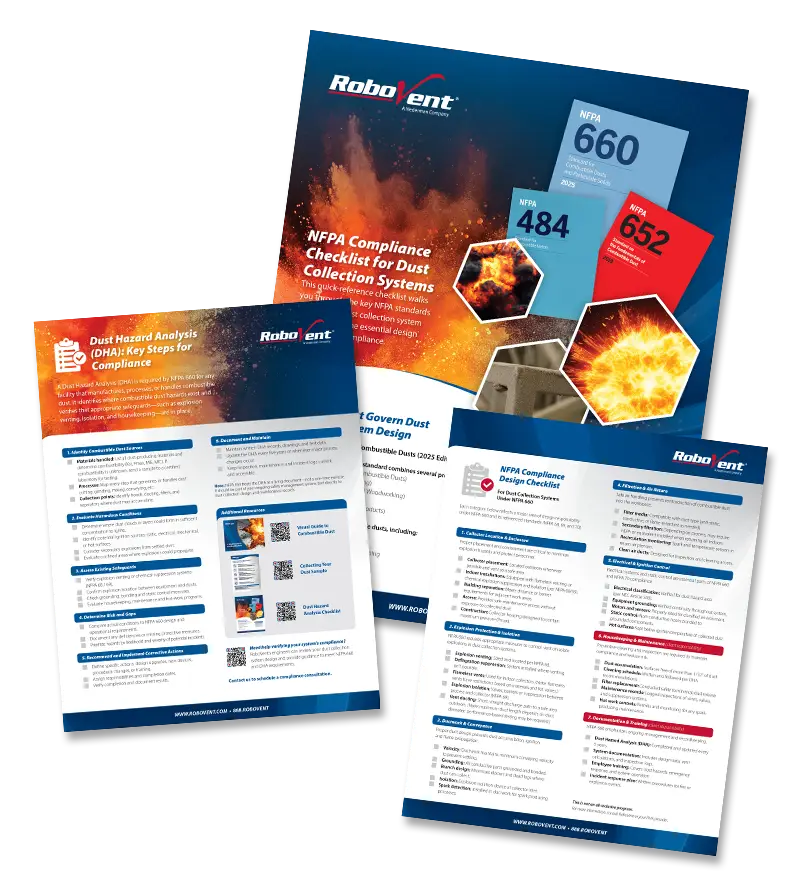
Our free NFPA Compliance Checklist for Dust Collection Systems walks you through the design elements and standards that matter most under the new NFPA 660 combustible dust standard—from dust collector placement and explosion protection to grounding, isolation and documentation. It’s your quick-reference guide to NFPA-compliant dust collection system design. Plus, learn more out the Dust Hazard Analysis (DHA) process with our Key Steps for DHA Compliance.
NFPA 660: The New Standard for Combustible Dust Safety
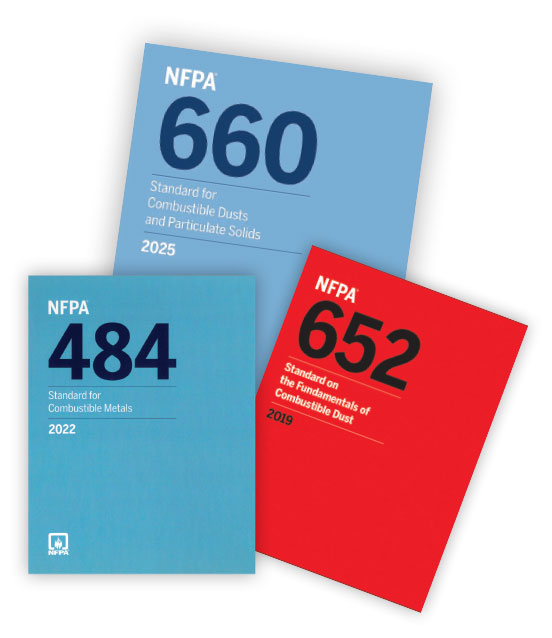
The NFPA combustible dust standards have evolved. The newly released NFPA 660: Standard for Combustible Dusts (2025 Edition) consolidates several previous NFPA dust standards (NFPA 652, 654, 664, 484, and 61) into a single, unified NFPA compliance document.
NFPA 660 defines the fundamental safety and design requirements for any facility that manufactures, processes or handles combustible dust. That includes how dust collection systems must be designed, installed and maintained to control ignition sources and prevent deflagrations.
It also references other key standards relevant for dust collection system design:
- NFPA 68 – Explosion Protection by Deflagration Venting
- NFPA 69 – Explosion Prevention Systems
- NFPA 70 (NEC) – Electrical Safety and Grounding
Together, these standards form the foundation of NFPA compliance for dust collectors. Every dust collection system should be reviewed against them to ensure safety from combustible dust explosions.

Why NFPA Compliance for Dust Collectors Matters
Dust collectors are at the heart of any combustible dust control strategy—and also one of your biggest risks if not properly designed.
The NFPA requirements for dust collectors cover everything from collector location and enclosure to explosion isolation and venting, ensuring systems are built to contain, divert or safely vent a deflagration event.
Failing to meet these requirements can result in:
- Increased fire or explosion risk
- OSHA citations and insurance penalties
- Costly downtime and equipment damage
Following the NFPA dust standards helps ensure your system is engineered for both safety and performance—protecting your people, your facility and your bottom line.
What’s Inside the Dust Collector Compliance Checklist
Our NFPA Compliance Checklist for Dust Collection Systems distills the essential design and compliance elements you need to know, including:

The NFPA standards that apply to dust collection system design

Dust collector placement, enclosure and venting guidelines

Explosion protection and isolation device requirements

Grounding, ductwork, and filtration best practices

Maintenance, housekeeping, and documentation essentials
How RoboVent Helps
RoboVent designs and engineers NFPA-compliant dust collection systems that meet or exceed the requirements of NFPA 660 and its referenced standards for combustible dust safety. Our experienced team can provide engineering support for your Dust Hazard Analysis (DHA) and point you to the right resources for combustible dust testing and DHA documentation.
We custom-engineer our dust collection systems for NFPA compliance based on your dust type, process risks and unique facility constraints. Our custom solutions may include:
- Explosion venting, isolation valves and full dust collector deflagration systems
- Spark control systems, such as our Delta3 Inline Centrifugal Spark Collector or active detect-and-suppress systems
- A dust collector fire suppression system appropriate for your dust type and environment
- Grounded ducting and static control
Talk to a RoboVent engineer about NFPA compliance for dust collectors and ensure your system meets the latest NFPA combustible dust standard.


