


Solutions for Forging Press Dust and Fume Control
Forging press operations demand air quality solutions that are engineered for the specific realities of each facility. High temperatures, oil-based die lubricants, metal scale and large press bay layouts create air quality challenges that cannot be addressed with off-the-shelf systems. RoboVent designs customized fume, smoke and oil mist control solutions based on your forging process, press configuration, contaminant profile and facility airflow to protect workers, maintain visibility and support regulatory compliance.
Our engineering team brings deep experience designing systems for heavy industrial forging environments, including large open bays and crane-served production lines. For forging applications where oil mist and thermally generated forging press smoke are the primary concerns, solutions often incorporate oil mist collectors or wet collectors as part of a broader engineered approach. Each system is tailored to integrate seamlessly with forging operations while delivering reliable, efficient and compliant air quality control.
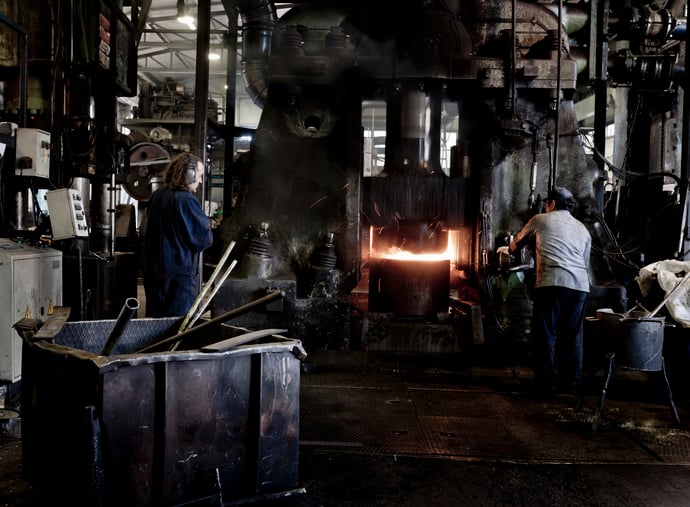
Air Quality Challenges in Forging Presses
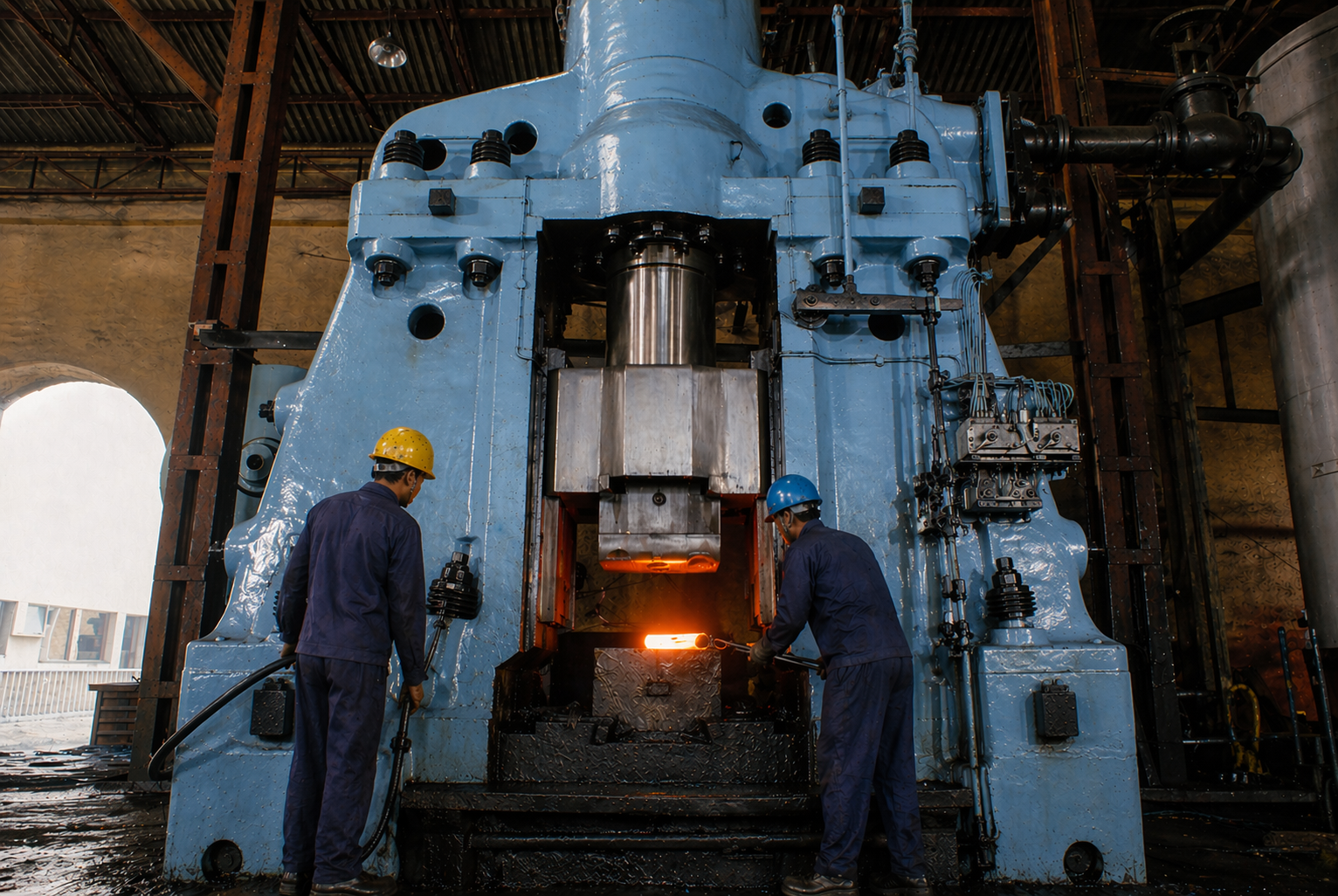 Forging press operations introduce a combination of high heat, lubricants and metal deformation that create complex air quality challenges. Unlike cutting or welding processes, forging generates a mix of oily aerosols, smoke and particulate that can be difficult to capture and control in large press bays.
- Oil Mist and Lubricant Smoke: Forging presses rely on die lubricants and release agents to prevent sticking and reduce tool wear. Under extreme heat and pressure, these lubricants atomize and thermally degrade, producing airborne oil mist and smoke that can linger in the work zone, reduce visibility and deposit residue on equipment and surfaces.
- Thermally Generated Fumes: The interaction of heated metal with lubricants and surrounding air produces smoke and gaseous byproducts. These emissions can contain fine aerosols and irritants that contribute to respiratory exposure risks, particularly in continuous or high-throughput forging operations.
- Metal Scale and Particulate: Heating billets and blanks creates oxide scale that flakes off during forging, handling and trimming. This scale can become airborne during press cycles and material transfer, contributing to dust accumulation around presses and adjacent processes.
- Large Open Press Bay Layouts: Forging presses are typically installed in open, crane-served production areas with limited enclosure. The size of the equipment and the need for material handling make close source capture difficult, allowing contaminants to spread across wide areas if airflow is not properly managed.
- Heat-Driven Air Movement: High temperatures around forging presses create strong thermal currents that disrupt natural airflow patterns. These heat plumes can carry oil mist and smoke upward and outward, reducing the effectiveness of poorly engineered capture or ventilation strategies.
Health and Safety Considerations for Forging Press Operation
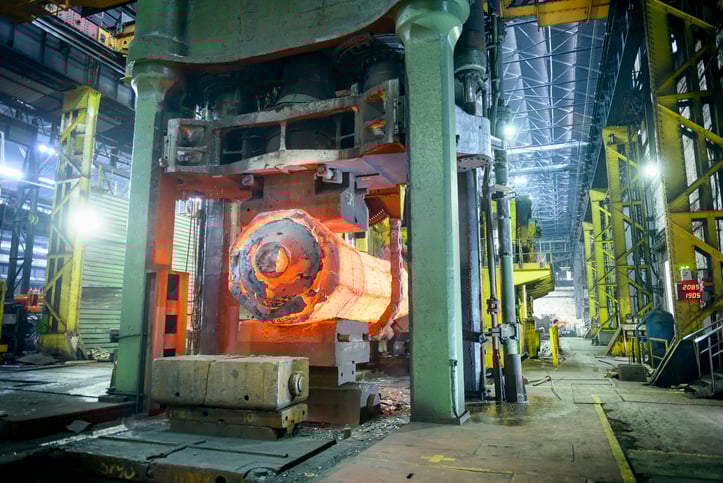
Forging press operations can expose workers to a complex mix of airborne contaminants generated by high temperatures, metal deformation and lubricant use. Without effective air quality controls, these emissions can pose respiratory and occupational health risks, particularly in high-volume or continuous forging environments.
- Oil Mist Inhalation: Die lubricants and release agents atomize under pressure and heat, producing airborne oil mist that can be inhaled deep into the lungs. Prolonged exposure to oil mist has been associated with respiratory irritation, reduced lung function and chronic pulmonary effects. Oil mist can also carry metal particles and chemical additives, increasing overall exposure.
- Smoke and Thermally Degraded Lubricant Byproducts: Extreme forging temperatures cause lubricants to break down and generate smoke containing fine aerosols and organic vapors. These emissions may include aldehydes and other irritants that can cause eye, nose and throat irritation and contribute to respiratory discomfort with repeated exposure.
- Metal Oxide Particulate Exposure: Oxide scale formed during billet heating and forging can become airborne during press cycles, part transfer and trimming. Inhalation of fine metal particulate may lead to respiratory inflammation and other long-term health effects, particularly in environments with inadequate capture or ventilation.
- Irritant and Toxic Gases from Lubricant Decomposition: Thermal degradation of forging lubricants and additives can release gases such as aldehydes and hydrocarbon vapors. While typically present at low concentrations, these gases can accumulate in poorly ventilated press bays and contribute to headaches, irritation and cumulative exposure risks.
- Visibility and Air Quality Degradation: Accumulation of oil mist and smoke can reduce visibility around forging presses and throughout press bays. Poor visibility can increase worker fatigue, complicate quality control and make it more difficult to recognize and manage airborne exposure risks.
Regulatory Compliance for Forge Presses
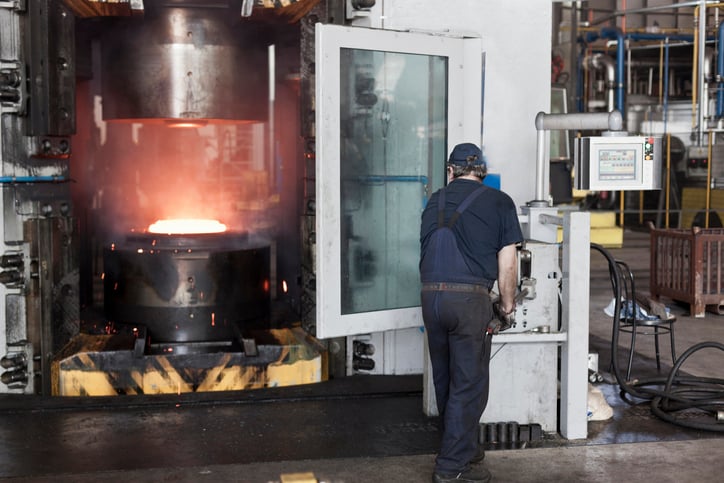
Forging press operations must comply with occupational health, safety and environmental regulations, particularly as manufacturers expand capacity, reshore production or modernize forging lines. Effective air quality control is essential for managing worker exposure and meeting regulatory requirements.
- Worker Health and Safety: Forging presses generate airborne oil mist, smoke and metal oxide particulate that must be controlled to protect worker health. Employers must comply with Occupational Safety and Health Administration (OSHA) permissible exposure limits for oil mist and metal particulates. Many facilities also follow National Institute for Occupational Safety and Health (NIOSH) and ACGIH recommendations, which may require more stringent exposure control to reduce long-term respiratory risks.
- Combustible Dust and Fire Considerations: Forging press operations do not typically produce fine combustible dust. However, metal scale and particulate can accumulate around presses and in downstream operations such as trimming, grinding or machining. Where applicable, combustible dust hazards must be evaluated and dust collection systems designed in accordance with National Fire Protection Association (NFPA) standards including NFPA 660, with additional requirements under NFPA 68 and NFPA 69 depending on the application.
- Environmental and Emissions Compliance: Oil mist, smoke and organic vapors generated during forging may contribute to regulated air emissions. Facilities must comply with federal and state air quality regulations, including U.S. Environmental Protection Agency Clean Air Act requirements. Proper capture and filtration help limit emissions, support permitting and reduce environmental impact.
Considerations in Dust and Emission Control for Forge Press Applications
Forging press environments vary widely depending on press type, lubricant use, operating temperature and adjacent processes. Effective air quality control requires careful evaluation of contaminant characteristics, airflow behavior and system safety requirements.
- Oil Mist Versus Dry Particulate: Forging press emissions are often dominated by oil mist and smoke from die lubrication and thermally degraded fluids. In these cases, oil mist collection technologies are typically appropriate. However, some forging operations also generate dry metal scale or particulate, particularly during billet handling, trimming or downstream finishing. Systems must be selected and configured based on whether contaminants are primarily oily, dry or mixed rather than assuming a single filtration approach.
- Filter Media Selection: Oil mist applications typically require specialized coalescing or multi-stage filtration media designed to capture fine aerosols without rapid loading. Filter selection should account for contaminant size, oil content, temperature and desired air recirculation strategy.
- Spark and Fire Risk Considerations: Forging presses generate hot metal and scale but do not typically produce sparks in the same way as cutting or grinding processes. As a result, spark control is not always required. However, in forging environments with hot scale, downstream abrasive operations or reactive metals, fire risk must be evaluated. In these cases, additional protection such as spark arrestors, fire suppression or wet separation may be appropriate based on a formal hazard assessment.
- Heat and Thermal Airflow Effects: High temperatures around forging presses create strong thermal currents that influence contaminant movement. Oil mist and smoke may rise rapidly and spread beyond the immediate press area if airflow is not properly engineered. System design must account for heat-driven airflow to ensure contaminants are captured effectively and not redistributed throughout the facility.
- Large Open Bay Layouts and Material Handling: Forging presses are often located in large open bays with overhead cranes and continuous material movement. These layouts limit the feasibility of full enclosure and close source capture. Solutions frequently rely on a combination of localized exhaust, ambient air management and engineered airflow patterns that maintain effectiveness without interfering with production.
- Integration with Adjacent Processes: Forging rarely operates in isolation. Trimming, machining, grinding or surface treatment operations located near presses may introduce additional contaminants or change hazard profiles. Air quality solutions should be designed with the full process flow in mind to avoid under-sizing systems or overlooking secondary exposure risks.
RECOMMENDED SOLUTIONS
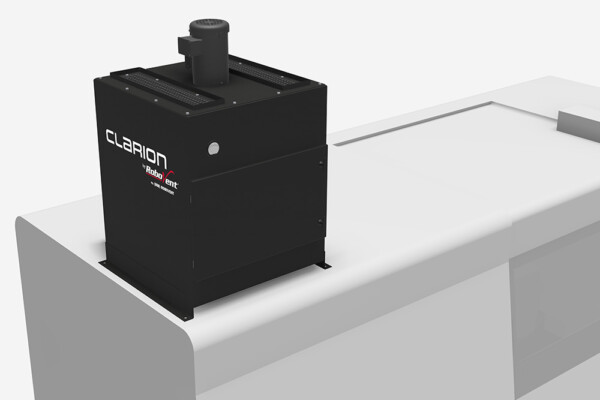
Oil Mist Collector | Clarion CFX® Series | RoboVent
CLARION® CFX SERIES A BREAKTHROUGH IN OIL MIST COLLECTION TECHNOLOGY The RoboVent Clarion® S...
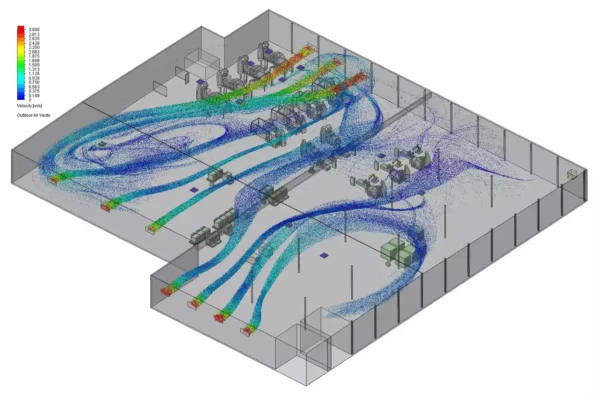
VentMapping® Engineering
VENTMAPPING® ENGINEERING A SOLUTION FOR EVERY APPLICATION In designing ventilation systems, a...
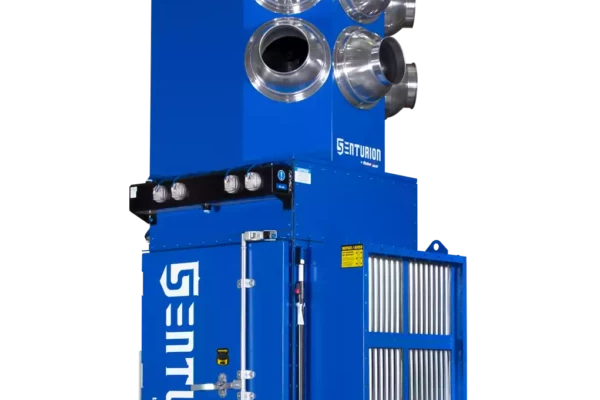
Vortex™ Series
Vortex Ductless Ambient Air Filtration System UNLEASH THE POWER OF THE VORTEX FOR CLEANER, HEAL...
TOTAL FILTRATION PARTNER
RoboVent is your full turnkey resource for clean air in industrial environments. From facility testing and engineering, to installing equipment, providing replacement filters and preventive maintenance, RoboVent is ready to manage the whole process.



CONTACT US
Contact one of our industrial dust experts to gain the advantage against dust-generating processes and applications.


