


Combustible Dust Risks in EV Battery Manufacturing: What You Need to Know
Global demand for electric vehicle (EV) batteries shows no signs of slowing down. In 2024, the demand worldwide surpassed 1TWh for the first time, and the demand is expected to surpass 3 TWh by 2030.
What could this mean for the clean and dry room environments of EV battery manufacturing plants? Ideally, more activity at their facilities. But with an increase in production comes the potential for greater dust buildup, including combustible dust found in EV battery materials that jeopardize the well-being of employees and facilities with the potential for explosions and fires.
-
Visual Guide to Combustible Dust Collection
-
Guide to Dust Control in Battery Manufacturing
What Steps in the EV Battery Manufacturing Process Have the Highest Combustion Risk?
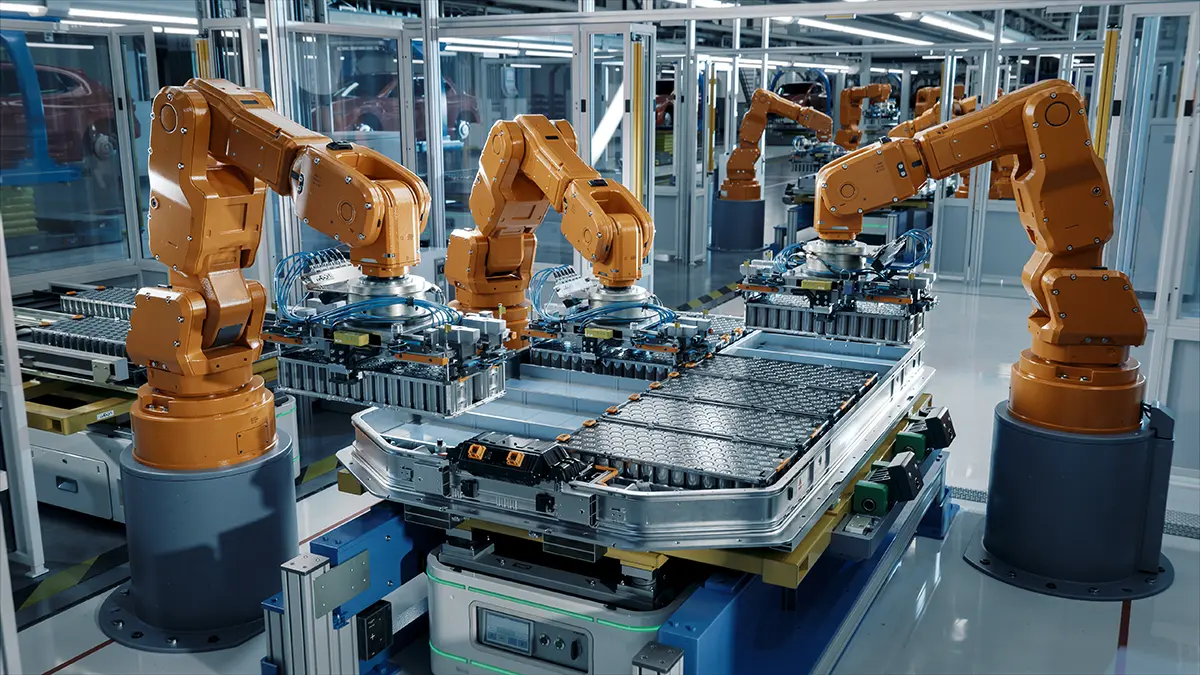
An EV battery production line.
Whether the batteries are prismatic, cylindrical, or pouch, battery manufacturers in the EV market follow a meticulous multi-step process to produce these power sources. It is a process that continues to evolve as new materials, battery chemistries, and production methods emerge.
Some of the steps in the battery manufacturing process tend to generate more combustible dust than others. During the powder dosing and mixing of battery anodes and cathodes—which are done in parallel but separate process lines—precise quantities of active materials are dosed and blended into a slurry, either manually or automatically. In the powder dosing and mixing of the anodes, the dry powders are weighed and mixed into a slurry. The powder dosing and mixing of the cathodes, meanwhile, blends metal oxides and binder dust together to form a slurry. This stage poses a high level of dust buildup and combustibility as highly combustible, airborne powders are enclosed in an area with several ignition sources potentially present.
The slitting stage also generates a high level of dust and combustibility. In this step, large “mother rolls” of electrode foil are cut into narrower “daughter rolls.” The slitting and cutting of these rolls disperses powder particles considered combustible, such as graphite, aluminum, copper, and binder dust.
Combustible Dust Types in EV Batteries

Materials in EV battery anodes and cathodes can create combustion risks in battery facilities.
Several of the fine powders that make up EV batteries carry combustion risks.
- Graphite is a fine, carbon-based material found during anode production and the slitting stage that is highly combustible.
- Aluminum, found in the cathode production and during slitting, is particularly dangerous and combustible in powdered form.
- Some of the polymers in binder dust are flammable.
- Carbon black can be easily dispersed in the air during the dosing and mixing stage because it is extremely fine.
- When combined, some mixed metal dust can combust under the right conditions.
Combustible dust is rated based on the Kst (explosion severity) and Pmax (maximum pressure) values. Dust is then grouped into ST classes (ST0-ST3) based on the Kst values.
Kst Values For Common Battery Dusts (Actual values will very by sample)
| Material | Kst | Class | Notes |
|---|---|---|---|
| Graphite (fine) | 120–180 | 120–180 | Highly combustible when finely divided |
| Aluminum powder | 200–315 | St 2 – St 3 | Very reactive; one of the most explosive common battery dusts |
| Lithium salts | Varies (often not explosive) | Varies | Some lithium compounds are more reactive than explosive—test to confirm |
| Binder dusts (e.g., PVDF) | 80–120 | St 1 | Polymer binders are often flammable and can contribute to fire propagation |
| Black mass | Varies on composition | St 1 – St 2 | Black mass is the term for the fine, dark powder produced from shredding batteries, which contains valuable metals like cobalt, lithium, nickel, and manganese. |
Preventing Fires and Explosions in EV Battery Manufacturing
EV battery manufacturers have safety and performance in mind when adopting dust collection solutions that collect dust during the battery making process. However, a dust collector system can inadvertently provide the right environment and conditions needed for a dust explosion.
The “explosion pentagon” explains that five elements must be present for combustible dust to explode:
- The dust must be combustible;
- The dust is suspended in the air;
- The area is enclosed;
- Oxygen is present;
- And an ignition source like sparks, heat, static, and friction must be present.
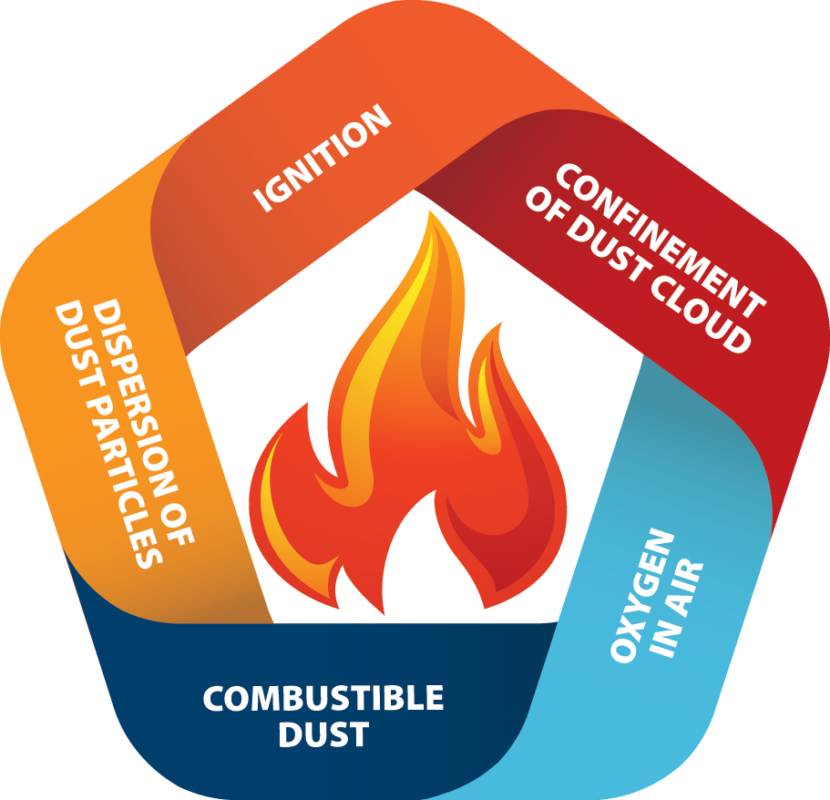
That is why a system collecting combustible dust must have built-in safeguards like spark control, fire suppression, and explosion protection to reduce or eliminate fire and deflagration events and have explosion pentagon steps go unfulfilled.
- Spark Control: Depending on the process risks, dust collectors may need a centrifugal spark arrestor or an active detect-and-suppress system for spark control.
- Explosion Protection: Dust collectors must be equipped with a dust collector deflagration system that is compliant with the National Fire Protection Association (NFPA). Options include chemical explosion protection, a rotary airlock, an explosion vent, a flameless vent and isolation
- Fire Suppression: Dust collectors in EV battery plants should be equipped with a fire suppression system that includes smoke/fire detectors, a water sprinkler system, clean agent gas, and/or a dry powder chemical agent.
RoboVent provides a fire safety checklist to help you reduce the risk of dust collector fires.
EV battery manufacturers working with combustible dust materials must follow NFPA standards to protect workers and avoid regulatory penalties. As of 2025, most standards were consolidated under NFPA 660: Standard for Combustible Dusts. This standard addresses the general requirements regarding the identification and control of combustible dust hazards.
One of the key areas addressed in NFPA 660 is the requirement that facilities handling combustible materials must conduct a Dust Hazard Analysis every five years and whenever there is a substantive change in materials or processes.
A DHA should identify all potential combustion risks in your facility, evaluate the severity of the risks, assess any safeguards in place, uncover any risks or gaps, define what protection measures are needed, and document your dust records.
A thorough DHA process will tackle five critical elements:
- Methodology and scope
- Material characterization
- Process characterization
- Hazard analysis and recommendations
- Administrative controls and recommendations
Two steps kickstart the DHA process: the collection of a dust sample produced by your process/es and an accredited lab testing your sample for explosiveness. Pending the sampling and testing, further action may be needed to combat your combustible dust situation.
Download the NFPA Compliance Checklist.
Still Have Combustible Dust Questions?
Each EV battery plant is different; each dust collection solution and combustible dust risk will vary by facility. Reach out to RoboVent to help you:
- Learn more about combustible dust and preventing explosions
- Discuss dust collector systems that are compliant to NFPA standards
- Understand the DHA process
- Find a solution that meets your specific processes and needs.
Contact the combustible dust experts at RoboVent for a custom solution engineered for your battery manufacturing facility.


