


Indoor Air Quality Regulations: OSHA Standards, Exposure Limits and Industrial IAQ Compliance
Indoor air quality regulations (IAQ) play an important role in helping manufacturers reduce harmful airborne contaminants, protect workers and maintain safe working environments. In manufacturing facilities, poor IAQ may result from dust, weld fumes, smoke, oil mist, chemical aerosols and other airborne particulates generated during routine production processes. Left unmanaged, these contaminants can create serious worker health and safety concerns, increase liability and negatively affect productivity, retention and facility performance.
Questions? Connect with an IAQ compliance expert.
Indoor Air Quality Regulations for Industry and Manufacturing
Unlike commercial or office environments, industrial indoor air quality standards are primarily focused on controlling occupational exposure to airborne contaminants that may threaten worker safety and long-term health.
In the United States, the Occupational Safety and Health Administration (OSHA) does not maintain one universal indoor air quality standard for manufacturing. Instead, workplace air quality is governed through a combination of OSHA requirements, including ventilation standards, substance-specific standards and permissible exposure limits (PELs) for regulated air contaminants. These standards are supported by additional scientific guidance from organizations such as the American Conference of Governmental Industrial Hygienists (ACGIH) and the National Institute for Occupational Safety and Health (NIOSH), which often recommend more stringent exposure limits based on evolving health research.
Understanding air quality OSHA requirements and how they relate to broader industrial hygiene best practices can be challenging, especially as regulations evolve and facilities face pressure to improve both compliance and worker experience. Questions surrounding OSHA regulations for air quality enforced, what contaminants are regulated and whether minimum compliance is enough to protect workers are increasingly important for manufacturers to address. While meeting regulatory standards matters, leading organizations understand that effective industrial air quality management goes beyond compliance alone. Clean air supports healthier employees, stronger retention, reduced downtime and safer, more productive facilities.
RoboVent helps manufacturers evaluate airborne risks, reduce exposure and improve compliance with industrial indoor air quality regulations and OSHA standards. Connect with an expert today.
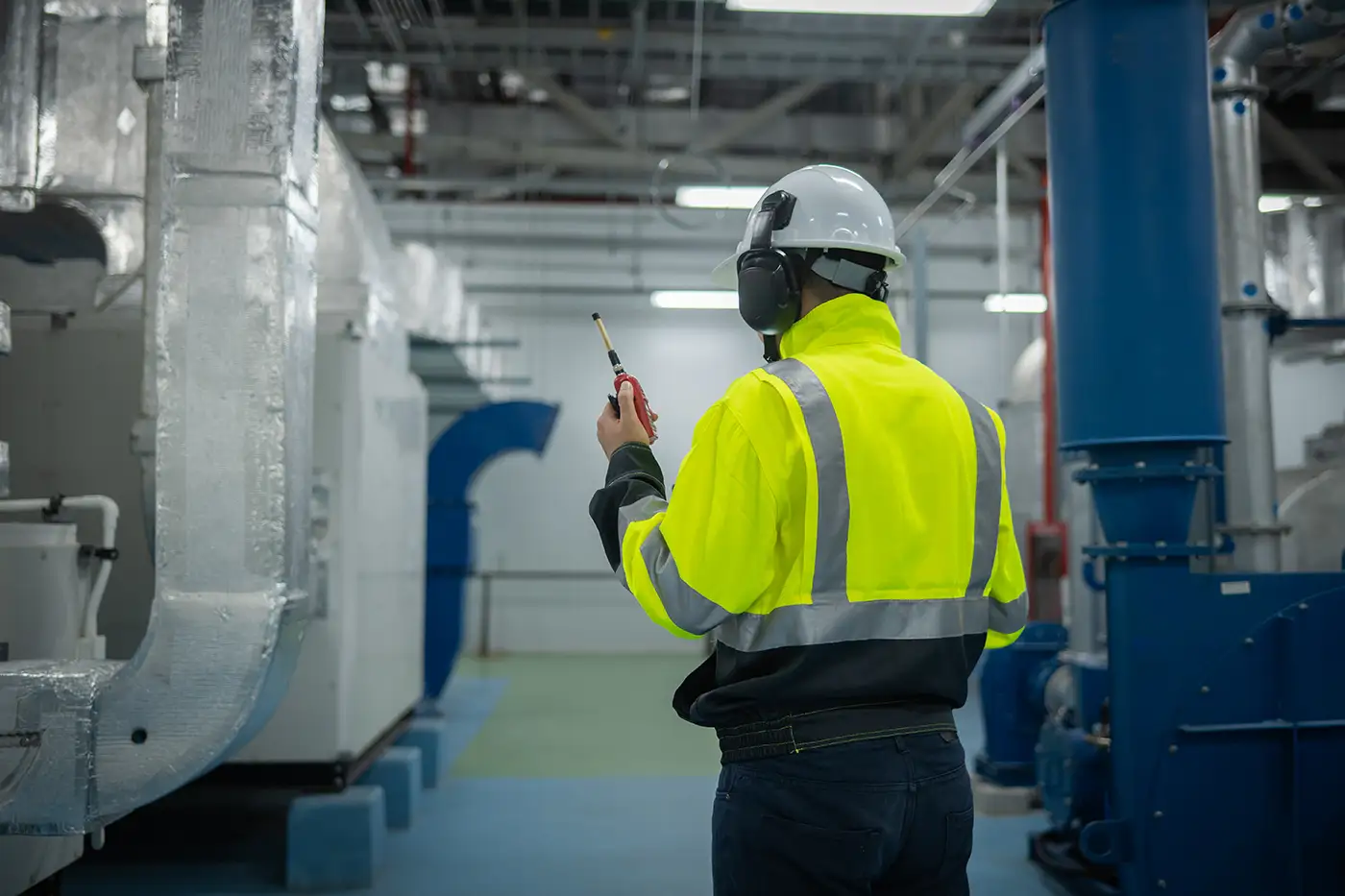
Understanding Indoor Air Quality Regulations in Manufacturing
Industrial indoor air quality regulations are designed to protect workers from harmful airborne contaminants generated during manufacturing processes. In industrial environments, maintaining compliance often means understanding not just one standard, but a network of regulations, guidelines and exposure recommendations that work together to shape safe workplace air quality. While OSHA indoor air quality standards are typically the primary compliance requirement for U.S. manufacturers, organizations such as NIOSH, ACGIH and the Environmental Protection Agency (EPA) also influence how facilities evaluate risk, monitor exposures and improve air quality.
OSHA: The Primary Authority on Industrial Air Quality

For most manufacturers, OSHA serves as the primary regulatory body governing workplace air quality. OSHA’s role is to protect employees from recognized workplace hazards, including airborne contaminants such as dust, fumes, smoke, oil mist and chemical aerosols.
Rather than having one universal regulation for industrial IAQ, OSHA regulates exposure through a combination of standards, including the General Duty Clause and 29 CFR Part 1910 Subpart Z, which establishes exposure limits OSHA uses for specific airborne substances.
These limits—called Permissible Exposure Limits (PELs)—define the maximum amount of certain contaminants workers may be exposed to over a specified period of time.
Examples of OSHA-regulated contaminants may include:
- Welding fumes and metal particulates
- Silica dust
- Hexavalent chromium
- Oil mist
- Wood dust
- Chemical vapors and aerosols
- Nuisance and process dusts
Different industries may face different exposure concerns depending on materials, processes and facility conditions.
ACGIH: Scientific Guidance Beyond Minimum Compliance

The ACGIH is not a regulatory agency, but its recommendations play an important role in industrial air quality management. ACGIH publishes Threshold Limit Values (TLVs®)—science-based exposure recommendations that are often more protective than OSHA PELs.
In many cases, OSHA standards lag behind emerging research, meaning a facility may technically meet regulatory requirements while still exposing workers to conditions that are less than ideal. Many manufacturers use ACGIH guidance to establish more proactive workplace air quality goals that support employee health, retention and comfort.
NIOSH: Research and Worker Protection Recommendations
The NIOSH conducts research and develops recommendations related to workplace exposure risks. While NIOSH does not enforce regulations, it publishes Recommended Exposure Limits (RELs) and scientific guidance that often informs future OSHA rulemaking and industry best practices.
For manufacturers, NIOSH resources can be especially valuable when evaluating emerging contaminants, improving air monitoring strategies or assessing long-term worker health risks.
EPA: Environmental Air Emissions Standards

While OSHA focuses on employee exposure inside a facility, the EPA regulates what facilities may release outside through air emissions standards. Depending on the industry and manufacturing process, facilities may need to comply with environmental requirements related to hazardous air pollutants, exhaust emissions or filtration performance.
Programs such as the National Emission Standards for Hazardous Air Pollutants (NESHAP) may apply to certain manufacturing sectors, particularly metal fabrication and finishing operations.
Why Understanding Multiple Standards Matters
Understanding air quality OSHA requirements is only part of the equation. Manufacturers that focus solely on minimum compliance may miss opportunities to improve employee wellbeing, reduce risk and future-proof operations against changing regulations. As exposure science evolves, many facilities are choosing to exceed minimum standards through better industrial ventilation, dust collection, source capture and industrial air quality monitoring.
Why Industrial Air Quality Compliance Matters—And Why Minimum Standards May Not Be Enough
For manufacturers, maintaining compliance with indoor air quality regulations is about more than avoiding citations. Poor industrial air quality can create serious operational, financial and workforce challenges. When airborne contaminants such as dust, fumes or oil mist are left unmanaged, facilities may face:
- Regulatory violations and liability risks related to OSHA and environmental standards
- Workers’ compensation claims and health concerns tied to long-term exposure
- Lower productivity and increased absenteeism due to discomfort or poor air quality
- Equipment contamination and housekeeping burdens from settled dust and oil mist
- Combustible dust hazards and operational disruptions that threaten uptime and safety
Meeting OSHA IAQ standards is an important starting point, but minimum compliance does not always guarantee optimal worker safety, health or comfort. In some cases, OSHA exposure limits are based on older research, while organizations such as ACGIH and NIOSH recommend more protective guidelines. A facility may technically meet exposure limits OSHA establishes and still struggle with odors, haze, irritation or poor air circulation that affect morale and performance.
Meeting Workforce Expectations
Today’s workforce also expects more from employers. Clean, healthy facilities can improve employee trust, retention and recruiting—particularly in competitive labor markets where skilled workers have options. Many manufacturers are now looking beyond minimum compliance to create safer, healthier work environments that support both employees and business performance.

Getting Started with Industrial Air Quality Compliance
Ensuring compliance starts with understanding what contaminants exist in a facility and how they move through the air. Effective strategies may include:
- Dust collection systems for source capture
- Industrial ventilation improvements to improve airflow and contaminant control
- Ambient air filtration to manage lingering particulates
- Exposure monitoring and air quality evaluations to identify risks and support compliance
The right approach depends on the materials, processes and exposure risks unique to each facility.
RoboVent’s Approach to Industrial Air Quality Compliance
At RoboVent, we believe compliance should not be reactive. Rather than simply helping manufacturers respond to citations or complaints, we work to proactively identify airborne risks and create long-term strategies for cleaner, safer facilities. Our approach combines engineering expertise, air quality evaluation and proven dust, fume and mist collection technologies to help manufacturers improve workplace conditions, support regulatory compliance and prepare for evolving standards. Contact us today.
Frequently Asked Questions About Indoor Air Quality Regulations and OSHA IAQ Standards
What are indoor air quality regulations in manufacturing?
Indoor air quality regulations in manufacturing are standards and guidelines designed to limit worker exposure to airborne contaminants such as dust, fumes, smoke, oil mist and chemical aerosols. Unlike office environments, industrial IAQ focuses on contaminants generated during production processes that may affect worker health, safety and regulatory compliance. OSHA is the primary regulatory authority in the U.S., though organizations such as NIOSH and ACGIH also provide important guidance.
Does OSHA regulate indoor air quality?
Yes. While OSHA does not have one single “indoor air quality” rule for manufacturing, it regulates workplace air quality through a combination of standards, including the General Duty Clause, 29 CFR Part 1910 Subpart Z and contaminant-specific Permissible Exposure Limits (PELs). These regulations address exposure to contaminants such as silica dust, welding fumes, metal particulates, oil mist and hazardous chemicals.
What are OSHA IAQ standards?
OSHA IAQ standards refer to the rules and exposure limits OSHA uses to protect workers from harmful airborne contaminants. OSHA establishes exposure limits for specific substances and may require engineering controls, ventilation, exposure monitoring, housekeeping or respiratory protection depending on the application and hazard level.
What are OSHA exposure limits?
Exposure limits OSHA establishes—called Permissible Exposure Limits (PELs)—define the maximum amount of a specific contaminant workers may be exposed to during a specified timeframe, typically an eight-hour shift. OSHA has PELs for many industrial contaminants, including welding fumes, silica dust, hexavalent chromium, lead and oil mist. Exposure limits vary by substance and industry.
How are OSHA regulations for air quality enforced?
Many manufacturers ask, how are OSHA regulations for air quality enforced? OSHA may enforce workplace air quality requirements through scheduled inspections, employee complaints, incident investigations or targeted industry initiatives. Enforcement often includes facility inspections, documentation reviews and industrial hygiene air sampling to evaluate contaminant exposure levels. Employers found out of compliance may face citations, corrective action requirements or fines.
What are the consequences of not meeting OSHA IAQ regulations?
Failure to meet OSHA air quality requirements may expose employers to several risks, including:
- Regulatory fines and citations
- Workers’ compensation claims related to occupational exposure
- Increased liability and litigation risk
- Operational disruptions or corrective actions
- Damage to recruiting, retention and company reputation
In severe cases, poor industrial air quality may contribute to workplace illnesses, combustible dust incidents or long-term employee health concerns.
What is the difference between OSHA and ACGIH standards for IAQ?
OSHA and ACGIH both influence industrial air quality, but they serve different purposes. OSHA establishes legally enforceable regulations and exposure limits, while ACGIH publishes Threshold Limit Values (TLVs®) based on scientific research and industrial hygiene expertise. In many cases, ACGIH recommendations are more protective than OSHA standards and may reflect newer research on long-term exposure risks.
For example, some manufacturers choose to design ventilation or filtration systems to meet ACGIH recommendations rather than simply achieving minimum OSHA compliance.
How are OSHA and NIOSH different?
OSHA creates and enforces workplace safety regulations, while NIOSH focuses on scientific research and recommendations related to occupational health. NIOSH publishes Recommended Exposure Limits (RELs) and conducts studies on workplace contaminants, often influencing future OSHA standards and industry best practices.
How are OSHA regulations different from EPA regulations?
OSHA and EPA regulations address different aspects of industrial air quality. OSHA focuses on protecting workers from airborne hazards inside the facility by regulating workplace exposure. The EPA regulates what facilities emit outside into the environment through air emissions standards.
For example:
- OSHA: worker exposure to weld fumes, dust and oil mist inside the plant
- EPA: exhaust emissions and hazardous air pollutants released into the surrounding environment
Depending on the process and industry, manufacturers may need to comply with both.
How often do OSHA regulations change?
OSHA regulations do not change on a fixed schedule, but updates occur as new research, workplace risks and scientific evidence emerge. Some standards may remain unchanged for decades, while others (such as silica dust regulations or welding fume guidance) evolve in response to new health findings. Because updates can significantly affect compliance requirements, manufacturers benefit from staying proactive rather than reacting after standards shift.
Are OSHA exposure limits enough to protect workers?
Not always. While OSHA standards establish legal minimums, many organizations consider them a starting point rather than the ideal benchmark for worker health. Some OSHA exposure limits are based on older research, while ACGIH and NIOSH may recommend stricter limits. Facilities that go beyond minimum compliance often experience better worker comfort, retention, morale and productivity.
How can manufacturers improve indoor air quality compliance?
Improving IAQ compliance starts with understanding what contaminants are present and where exposures occur. Common strategies include:
- Dust collection systems for source capture
- Industrial ventilation systems to improve airflow
- Ambient air filtration for facility-wide air cleaning
- Air quality testing and exposure monitoring
- Routine maintenance and housekeeping practices
A proactive approach helps manufacturers reduce exposure risks, improve worker wellbeing and prepare for changing regulations.
What Is a PEL?
A permissible exposure limit, or PEL, is the maximum amount of a regulated airborne contaminant that a worker may be exposed to under OSHA standards. PELs are typically measured as an eight-hour time-weighted average (TWA), which reflects a worker’s average exposure over a standard work shift. Some substances may also have ceiling limits or short-term exposure limits that cannot be exceeded during specific periods.
PELs are important compliance benchmarks, but they should not always be treated as a guarantee of safe exposure. Many OSHA PELs were established decades ago, and OSHA has acknowledged that some may not reflect the latest health science. For this reason, many manufacturers also consider more protective guidance from organizations such as ACGIHand NIOSH when setting internal air quality goals.
Examples of OSHA PELs for selected industrial contaminants include:
- Cadmium: 0.005 mg/m³ as an 8-hour TWA
- Hexavalent chromium: 5 µg/m³ as an 8-hour TWA
- Lead: 0.05 mg/m³ as an 8-hour TWA
- Nickel metal and insoluble compounds: 1.0 mg/m³ as an 8-hour TWA
- Manganese compounds and fume: 5 mg/m³ ceiling limit
Because exposure limits vary by substance, compound, industry and exposure basis, employers should verify the applicable OSHA standard for each contaminant present in the facility. Air quality testing, exposure monitoring and industrial hygiene evaluations can help manufacturers determine whether worker exposures are below applicable PELs and whether additional controls are needed.
How Do I Make Sure I Am Meeting OSHA PEL’s?
The first step in meeting a PEL is to understand your current air quality. Doing an air quality audit allows you to get a comprehensive, quantitative analysis of your air quality. Independent, licensed, third party professionals—usually industrial hygienists—perform this service by setting up monitors throughout your facility to collect and analyze air quality data. They can also attach monitors to workers’ uniforms to test exposure in the breathing zone. An air quality audit collects information on the volume of contaminants, toxicity and when and where air quality problems are occurring. An audit comes with a full report which can be a very useful tool in creating an air quality strategy—or in documenting the exceptional air quality you might already have!
If your air quality exceeds the PEL for any of the substances OSHA regulates, there are solutions. Increasing ventilation can cut contaminants and lower workers’ exposure levels. Adding ambient filtration would also achieve this goal while avoiding the high energy costs associated with ventilation’s need for heating or cooling your makeup air. If a more intensive solution is needed, a source capture system could be installed where the fumes or dust are generated. Source capture is the most efficient means of reducing exposure levels and meeting OSHA PEL’s. You can learn more about these options here.
The air quality experts at RoboVent understand how to meet any air quality goal in the most cost-effective way possible. They discuss with you the variables involved—airflow, filter media, targeted substances, equipment location and more—and prescribe solutions. They understand regulations and PEL’s as well as they do blower speeds and filter types.


