


Industrial Ventilation System Design
Improving Indoor Air Quality, Comfort and Compliance Through Airflow System Design
Effective industrial ventilation engineering supports indoor air quality by controlling airborne contaminants, regulating temperature and removing heat, fumes and odors. Through a combination of general ventilation for industrial environments, exhaust ventilation systems and properly balanced makeup air systems, facilities can achieve consistent air exchange and stable airflow conditions.
RoboVent delivers facility ventilation design for demanding manufacturing environments, integrating industrial exhaust fans, airflow distribution and pressure control into a complete system. The result is a manufacturing ventilation system that improves air quality, enhances worker comfort and supports long-term regulatory compliance
How Poor Airflow Design Leads to Bigger Problems
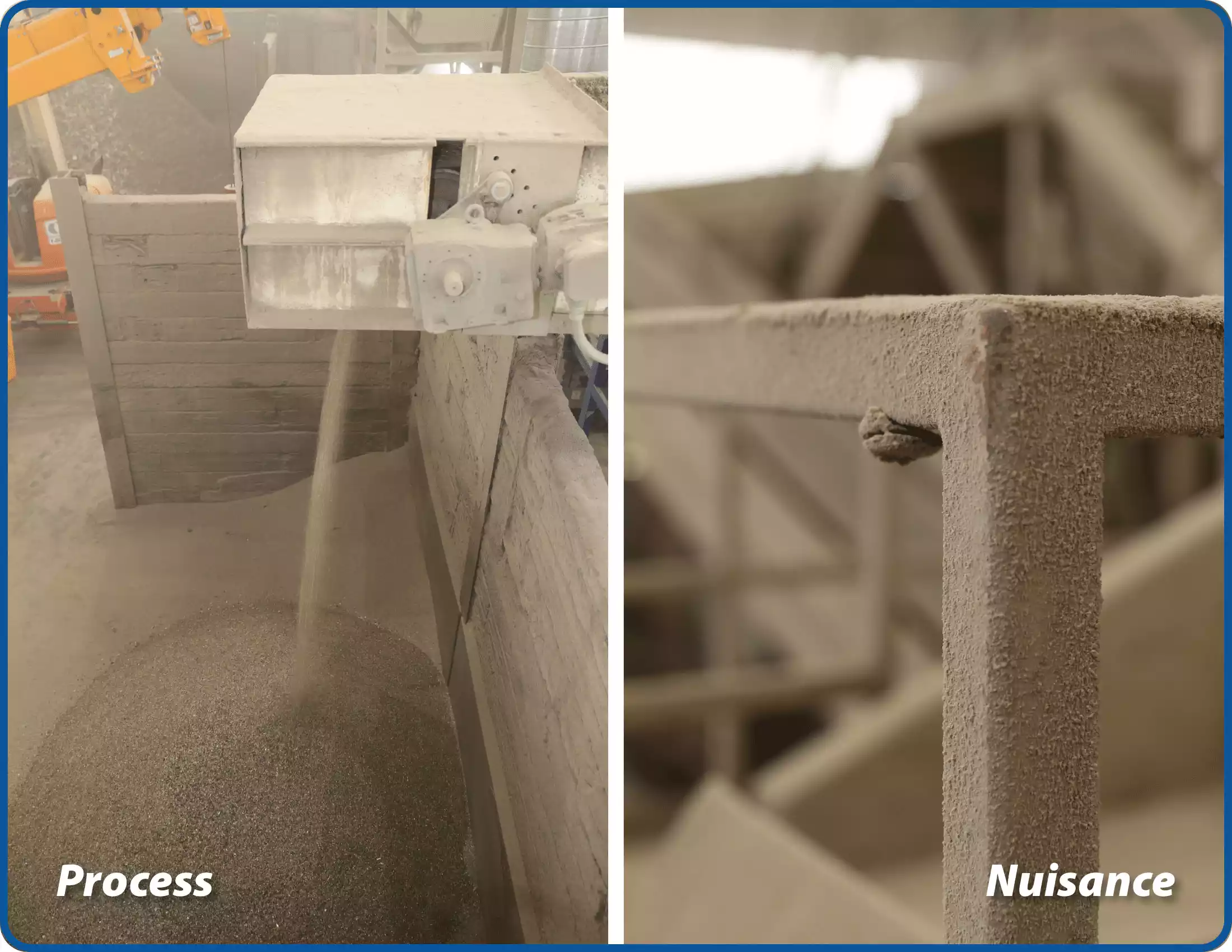
In many manufacturing environments, airflow is not fully coordinated across the facility. Without a well-designed ventilation strategy, air movement can become inconsistent, allowing contaminants, heat and fumes to build up or spread unevenly.
This can result in:
- Airborne dust, fumes and heat accumulating or migrating across work areas
- Inconsistent indoor air quality between production zones
- Stagnant air pockets and poor overall circulation
- Increased employee exposure and OSHA compliance risks
- Pressure imbalances that disrupt processes or allow cross-contamination
- Reduced effectiveness of existing air control systems
- Higher energy costs from inefficient air exchange and airflow distribution
Industrial ventilation is not just about moving air; it’s about controlling airflow throughout the facility to maintain safe, stable and efficient operating conditions.
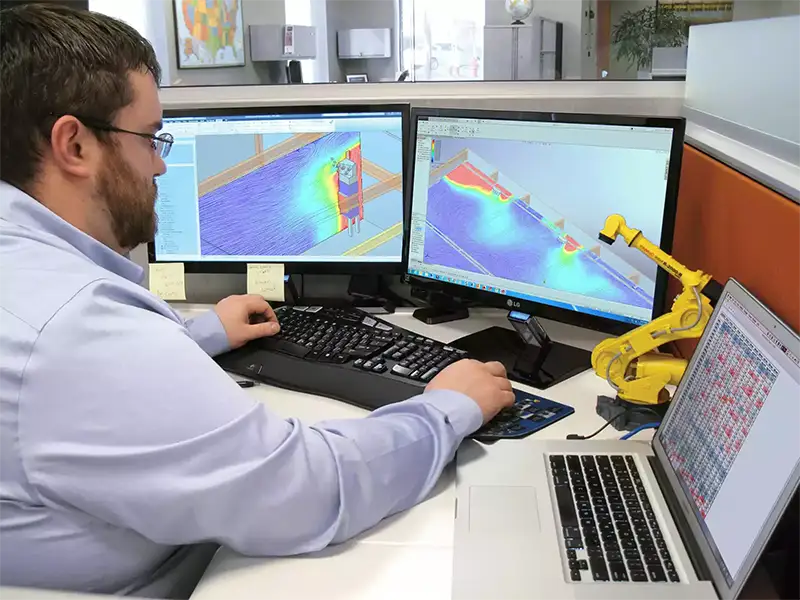
Industrial Ventilation System Design Services from RoboVent
Industrial ventilation system design is the process of creating a coordinated strategy for air movement, air exchange and contaminant control across a facility. This includes general ventilation, local exhaust ventilation, exhaust systems, makeup air systems and facility airflow management.
Rather than relying on isolated solutions, RoboVent designs integrated manufacturing ventilation systems that align with real operating conditions.
Our expertise includes:
General (Dilution) Ventilation Systems: Design air exchange systems and dilution ventilation strategies to reduce contaminant concentration and maintain consistent indoor air quality across large spaces.
Local Exhaust Ventilation (LEV): Capture contaminants at or near the source through hood design, enclosure strategies and controlled airflow to protect the breathing zone.
Industrial Exhaust Systems: Remove contaminated air, heat and fumes using properly designed exhaust ventilation systems and industrial exhaust fans.

Makeup Air Systems: Replace exhausted air with conditioned makeup air to maintain pressure balance, temperature control and stable facility conditions.
Facility Airflow Design and Management: Control airflow direction, pressure relationships and air distribution to eliminate stagnant zones and prevent contamination spread.
Integrated Ventilation and Dust Collection Systems: Align ventilation and dust collection systems to ensure balanced airflow, effective contaminant control and consistent system performance.
RoboVent: Your Industrial Ventilation System Design and Engineering Experts
RoboVent brings:
- Expertise in industrial ventilation engineering and facility airflow design
- Experience designing manufacturing ventilation systems across diverse industries
- Deep understanding of air exchange systems, dilution ventilation and LEV
- Ability to integrate exhaust ventilation systems, makeup air systems and dust collection

- Data-driven tools such as VentMapping to visualize and optimize airflow
Rather than applying generic solutions, RoboVent delivers tailored ventilation systems designed for real-world performance.

RELATED SERVICES

Dust Collection Systems Design and Engineering
Dust Collection Systems Design and Engineering Industrial dust collection engineering services ...
NFPA Compliance Audit for Dust Collection Systems
NFPA Compliance Audit for Dust Collection Systems Ensure Your Dust Collection System Meets NFPA...
Dust Collection System Optimization
Dust Collection System Optimization Improve the Performance of Your Dust Collection System Dus...
Dust Collection System Audit
Dust Collection System Audit Identify What’s Limiting Your System Performance A dust collect...
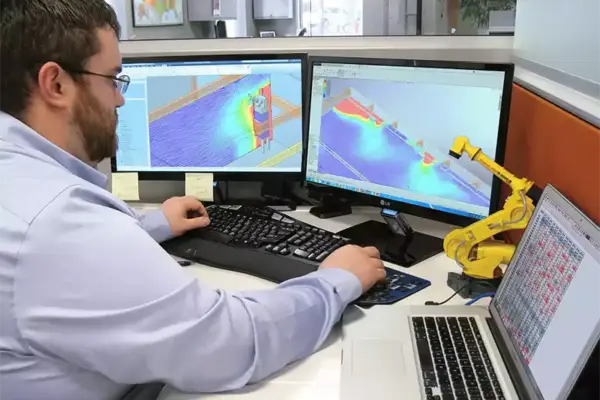
VentMapping® Engineering Services
VentMapping® Engineering Services Engineered Solutions for Complex Dust, Fume & Ventilatio...
Frequently Asked Questions
Industrial Ventilation System Design
What is industrial ventilation system design?
Industrial ventilation system design is the process of planning how air moves through a facility to control airborne contaminants. It includes designing capture points, ductwork, airflow patterns and system integration to remove dust, fumes and other airborne hazards. A well-designed system ensures contaminants are captured at the source and do not spread throughout the facility. This approach improves air quality, system efficiency and overall workplace safety.
What is the difference between ventilation and dust collection?
Ventilation focuses on air movement and air exchange within a facility, while dust collection focuses on capturing and filtering contaminants. Ventilation manages how air flows and is replaced, while dust collection removes specific particles from the air. Both systems work together but serve different roles. Effective air quality control requires proper design of both.
What is local exhaust ventilation (LEV)?
Local exhaust ventilation (LEV) captures contaminants at or near the source before they can spread into the facility. It typically includes hoods, enclosures and ductwork designed to remove dust, fumes or vapors. LEV helps reduce exposure in the immediate work area. It is one of the most effective methods for controlling airborne hazards.
Why is ventilation design important for industrial air quality?
Ventilation design determines how effectively airborne contaminants are controlled within a facility. Without proper design, contaminants can spread, recirculate or accumulate in certain areas, increasing exposure risks. Even high-quality filtration equipment cannot compensate for poor airflow patterns. Effective design ensures contaminants are captured and removed efficiently, supporting both performance and OSHA air quality compliance.
How does ventilation design support OSHA air quality compliance?
Proper ventilation design helps facilities manage airborne contaminant levels in alignment with OSHA permissible exposure limits (PELs). By controlling how contaminants are captured and removed, ventilation systems reduce employee exposure and support compliance efforts. Design also plays a role in documentation and defensibility during audits or inspections. A data-driven approach ensures compliance is based on measurable performance, not assumptions.
What is included in an industrial ventilation system design?
A comprehensive ventilation design includes airflow analysis, contaminant source identification, hood and capture design, ductwork layout, system sizing and integration with filtration equipment. It also considers factors such as air balance, pressure loss and system efficiency. The goal is to create a coordinated system that performs reliably under real operating conditions. Each design is tailored to the facility’s processes and layout.
When should a facility evaluate or redesign its ventilation system?
Facilities should evaluate ventilation design when installing new equipment, changing processes or experiencing air quality issues. Signs such as visible dust, inconsistent airflow or increased maintenance can indicate design problems. Evaluations are also recommended when preparing for compliance audits or system upgrades. Proactive design improvements can prevent larger issues and improve long-term performance.
Can existing ventilation systems be improved without full replacement?
Yes, many existing systems can be optimized through design adjustments rather than full replacement. Changes to airflow balance, duct routing, capture points or system integration can significantly improve performance. Testing and analysis help identify where improvements can be made. Optimization is often a cost-effective way to enhance air quality and system efficiency without starting from scratch.
Contact Us
Need to schedule a repair or PM appointment? Just fill out the form below. Or call us at (888) 762-6836 to schedule an emergency repair.


