


Heat Stress in Manufacturing: Productivity Loss, Worker Health Risks and Regulatory Compliance
Summer heat is a fact of life in manufacturing. But for most facility managers and plant engineers, the full cost of that heat—in lost productivity, worker health risks and growing compliance obligations—is never fully calculated.
The research tells a different story than "workers just need to tough it out." A major peer-reviewed meta-analysis found that nearly one in three workers exposed to heat stress conditions reports measurable productivity losses. Heat exhaustion and heat stroke are recognized occupational hazards with real liability implications. And while a specific federal indoor heat standard doesn't yet exist, OSHA already has enforcement tools in place, and several states have moved ahead with their own requirements.
Here's what manufacturers need to know.
Beat the heat with RoboVent ICE: Integrated Dust Collection and Air Conditioning
What Heat Does to Manufacturing Workers
 Heat stress occurs when the body can no longer adequately regulate its core temperature. In a manufacturing environment—where physical exertion, radiant heat from equipment and limited air movement combine—conditions can become dangerous faster than workers or supervisors realize.
Heat-related illness exists on a spectrum. Heat cramps and heat exhaustion are serious warning signs, with symptoms including heavy sweating, weakness, nausea and dizziness. Left unaddressed, these can progress to heat stroke, a medical emergency characterized by core body temperature above 104°F, confusion and hot dry skin that can result in permanent disability or death.
The risks extend beyond the most visible symptoms. Workers in heat stress conditions show measurable cognitive decline, affecting judgment, reaction time and error rates. Perhaps less well known is the link between sustained heat exposure and kidney disease: research found that workers who regularly work in heat stress conditions are at higher risk for kidney disease or acute kidney injury. Dehydration compounds all of these risks, reducing both physical and mental capacity.
Certain workers face elevated risk: those over 65, workers with cardiovascular disease or diabetes, employees on certain medications, and anyone new to working in hot conditions who hasn't yet acclimatized.
Heat Stress and Productivity: What the Research Shows
The productivity impact of heat stress is well documented, and the numbers are more significant than most manufacturers expect.
A landmark 2018 meta-analysis published in The Lancet Planetary Health examined 111 studies covering more than 447 million workers across 40 occupations in 30 countries. The findings are stark:
- Nearly one in three workers exposed to heat stress conditions reports measurable productivity losses.
- Productivity declines by an average of 2.6% for every degree above the heat stress threshold*.
- Workers in hot conditions are four times more likely to experience occupational heat strain than those working in comfortable temperatures.
The heat stress threshold*—measured using Wet Bulb Globe Temperature (WBGT)—can be reached at much lower ambient temperatures than manufacturers expect, especially in humid conditions. A facility at 75°F with high humidity and radiant heat from welding or other processes can already be at the heat stress threshold for most workers.
The financial implications compound quickly. Consider a facility with 30 production workers earning the current U.S. manufacturing average of around $30 per hour. At 90°F, productivity losses could represent thousands of dollars in lost output per week, every week of summer.
The impact on absenteeism and turnover adds further cost. Heat-related illness drives sick days, and uncomfortable working conditions are a documented factor in employee retention decisions. In a labor market where U.S. manufacturing faces a projected shortage of 1.9 million workers by 2033, the physical environment in your facility is a recruiting and retention variable that is easy to overlook and expensive to ignore.

OSHA Heat Index Guidelines and Indoor Temperature Regulations
There is currently no specific federal OSHA standard regulating indoor workplace temperatures. That does not mean, however, that manufacturers have no compliance obligations — or that the landscape is standing still.
What's in place now:
OSHA enforces heat safety through the General Duty Clause, which requires employers to provide a workplace free from recognized hazards, including heat stress. In April 2026, OSHA updated its National Emphasis Program on outdoor and indoor heat-related hazards, directing inspection resources to 55 high-risk industries, including manufacturing, based on heat illness rates and citation history from 2022 to 2025. The updated program includes random inspections on days when the National Weather Service issues heat advisories or warnings.
Two authoritative bodies publish recommended (though not legally enforceable) guidelines that represent the recognized standard of care for occupational heat exposure. Both are widely referenced by industrial hygienists and safety professionals, and OSHA inspectors may use them as benchmarks.
- NIOSH publishes Recommended Exposure Limits (RELs) for heat based on WBGT measurements.
- The American Conference of Governmental Industrial Hygienists (ACGIH) publishes Threshold Limit Values (TLVs) for heat using the same methodology.
Several states have moved ahead of federal standards with their own requirements. California's Heat Illness Prevention Standard triggers mandatory protections at 80°F. Maryland, Washington, Minnesota, Oregon and Colorado have also enacted specific occupational heat exposure laws.
How to Reduce Heat Stress in Your Manufacturing Facility
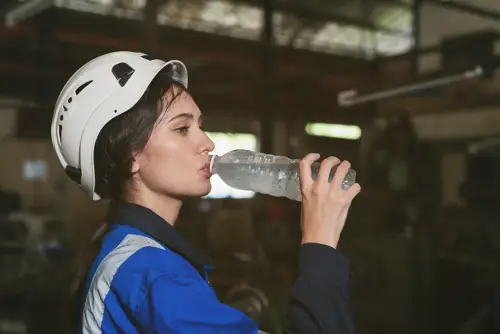 Most effective heat management programs in manufacturing combine engineering controls, administrative practices and cooling infrastructure.
Engineering controls address heat at the source and are generally the most effective long-term approach:
- Increase air circulation with fans or ventilation systems
- Install radiant heat shields around high-heat equipment
- Insulate hot surfaces including pipes, furnaces and ovens
- Use spot cooling in high-exposure work areas
- Integrate air conditioning or evaporative cooling where feasible
Administrative controls reduce worker exposure through scheduling and policy:
- Schedule physically demanding work during cooler parts of the day
- Implement mandatory rest breaks in cool or shaded areas
- Use a buddy system to monitor workers for heat illness symptoms
- Provide acclimatization periods for new workers or those returning after time off
- Train supervisors to recognize early signs of heat exhaustion and heat stroke
Hydration and personal protective measures reduce the risk of heat exhaustion or heat stroke:
- Ensure cool drinking water is readily accessible throughout the facility
- Encourage frequent hydration before workers feel thirsty
- Consider cooling vests or other personal protective equipment for high-exposure roles
RoboVent ICE: Integrated Cooling and Dust Collection
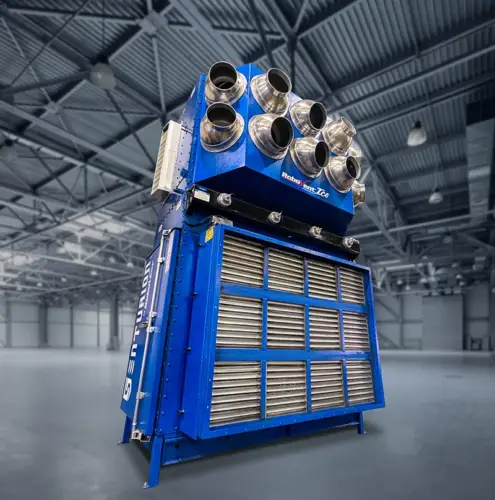 For manufacturers already running dust collection or air filtration systems for air quality compliance, there is an opportunity to address facility cooling more efficiently. RoboVent ICE integrates refrigerant cooling directly into your existing dust collection infrastructure, so the air you're already moving for compliance does double duty for comfort. The result is a cooler, cleaner facility without the cost and complexity of a standalone HVAC overhaul.
Learn more about RoboVent ICE.
* The heat stress threshold is measured using Wet Bulb Globe Temperature (WBGT), which incorporates air temperature, humidity, radiant heat and air movement rather than air temperature alone. The Lancet Planetary Health meta-analysis used WBGT thresholds of 22°C (71.6°F) for very intense physical work and 24°C (75.2°F) for most occupations.


