


Dust Testing and Analysis
Understanding Dust Composition Analysis and What It Means for Your Facility
Not all dust is the same. The composition, particle size and behavior of dust in your facility directly impact health risks, system performance and potential fire or explosion hazards.
Dust testing and analysis provide the data needed to identify what you’re dealing with so you can make informed decisions about control, safety and system design.
If You Don’t Understand Your Dust, You Can’t Control It
Many facilities treat dust as a general problem; something to capture, filter or clean up. But without understanding the specific characteristics of your dust, even well-designed systems can fall short.
Different types of dust behave very differently depending on their source and composition. As a result, unknown or untested dust can lead to:
- Unrecognized health risks from inhalation or toxic exposure
- Increased fire or explosion potential in combustible dust environments
- Ineffective dust collection or filtration performance
- Product contamination in sensitive manufacturing environments
- Equipment wear, buildup and unexpected downtime
In industrial environments, dust isn’t just an operational nuisance, it can be a measurable risk factor that affects safety, performance and long-term reliability.

Dust Testing & Analysis Services from RoboVent
Dust testing and analysis is the process of identifying the physical and chemical characteristics of dust generated in your facility. This includes evaluating how dust behaves, how hazardous it may be and how it should be controlled.
Rather than treating all dust the same, testing allows facilities to understand critical differences, such as the distinction between process dust generated directly from production and nuisance dust that accumulates from general activities.This insight is essential for designing effective dust collection systems, improving air quality and reducing operational risk.
RoboVent’s dust testing and analysis services include:

Dust Composition Analysis: Identification of material type, particle size and chemical characteristics.
Combustibility Testing: Evaluation of explosion potential using metrics such as Kst (deflagration index) and Pmax (maximum pressure developing in an enclosed vessel).
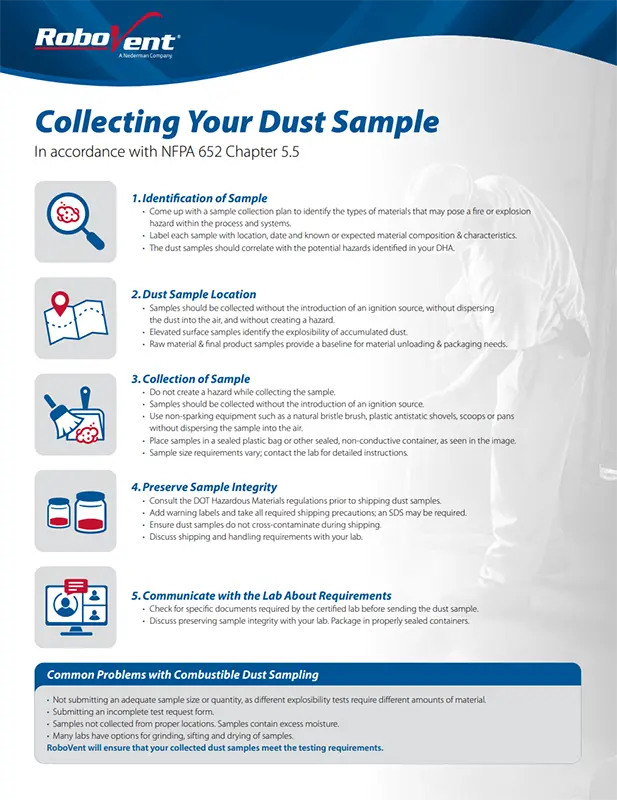
Dust Sampling & Collection: Strategic sampling from key process points, equipment and facility areas.
Process Dust vs. Nuisance Dust Evaluation: Identification of dust sources and how different dust types behave within the facility.
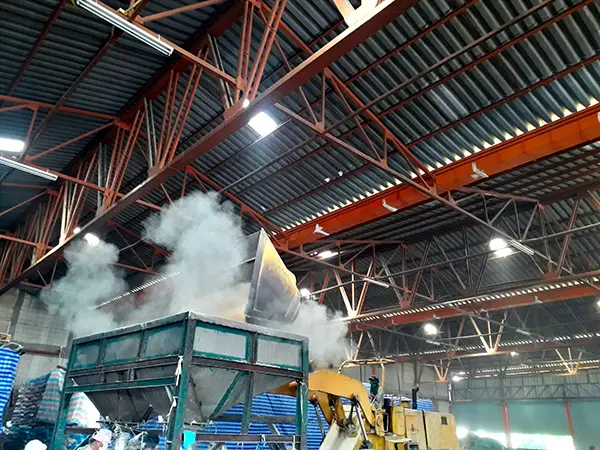
Dust Accumulation & Migration Assessment: Analysis of where dust is generated, how it travels and where it settles.
System Performance Insights: Evaluation of how current dust collection and filtration systems are handling existing dust conditions.
Once dust characteristics are understood, facilities can:
- Identify whether dust presents a combustible or toxic risk
- Improve dust capture at the source and reduce airborne spread
- Optimize dust collection system design and performance
- Reduce buildup that can lead to equipment issues or safety hazards
- Make informed decisions about process changes or material handling
Even in facilities with existing dust control systems, testing often reveals opportunities to improve efficiency, safety and long-term reliability.

Combustible Dust Testing Experts
Effective dust analysis requires more than lab data, it requires an understanding of how dust behaves in real industrial environments.
RoboVent combines:
- Expertise in industrial processes and dust-generating applications
- Deep knowledge of airflow, particulate behavior and system design
- Experience translating testing data into practical solutions
- Integrated capabilities—from testing and analysis to system optimization
Rather than treating dust testing as a standalone exercise, RoboVent uses it to inform smarter, more effective air quality strategies.

RELATED SERVICES
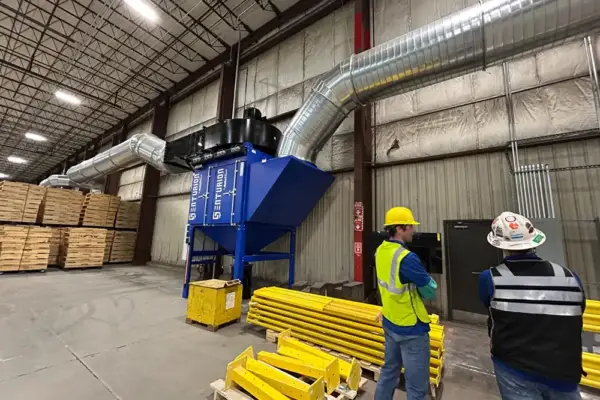
Facility Testing & Evaluation Services
Facility Testing & Evaluation Services Identify indoor air quality problems, improve ventil...
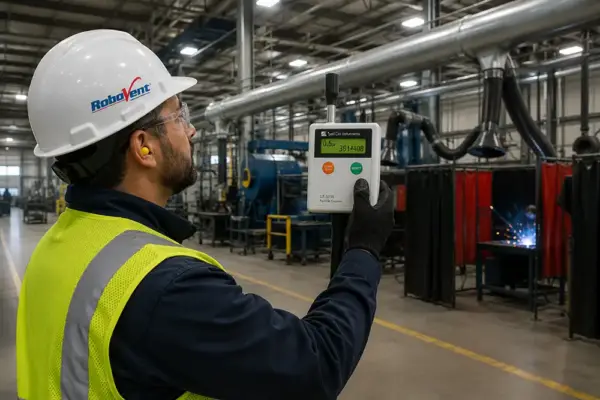
Indoor Air Quality Testing
Indoor Air Quality Testing Measure What’s in Your Air and What It Means for Your Operation C...
Dust Hazard Analysis (DHA) Support
Dust Hazard Analysis (DHA) Support Strengthen Your Dust Hazard Analysis with the Right Data and...
Indoor Air Quality Compliance
Indoor Air Quality Compliance Navigate Workplace Air Quality Regulations with Clarity and Confi...
Frequently Asked Questions
Dust Testing and Analysis
What is the difference between process dust and nuisance dust?
Process dust is generated directly from manufacturing activities, such as cutting, grinding or material handling, and is often more concentrated and hazardous. This type of dust is typically tied to specific operations and may require targeted capture and filtration strategies. Nuisance dust, on the other hand, comes from background activities like movement, housekeeping or environmental factors and is generally more dispersed. While nuisance dust is often less hazardous, it can still impact air quality, visibility and equipment performance if left unmanaged. Understanding the difference helps facilities apply the right control methods in the right areas.
What is dust testing and analysis?
Dust testing and analysis involves evaluating the composition, particle size and behavior of dust in a facility to understand potential health, safety and operational risks. Laboratory testing is a core component and may include combustibility testing to determine Kst and Pmax values, particle size analysis to understand how dust behaves in the airstream, composition analysis to identify toxic or regulated materials, and bulk density and moisture content evaluation. Together, these tests reveal whether dust presents hazards such as toxicity, explosibility or problematic accumulation — and at what levels. With this data, facilities can make informed decisions about ventilation, filtration and dust control strategies, and ensure those decisions are grounded in actual material characteristics rather than assumptions.
Why is it important to test industrial dust?
Different types of dust have different risks, but those risks are not always visible. Some dusts are toxic when inhaled, with exposure limits governed by OSHA permissible exposure limits (PELs) — and without testing, facilities often have no reliable way to know whether those limits are being exceeded. Others may be combustible, presenting fire and explosion hazards that require evaluation under NFPA 660. Without testing, facilities are relying on assumptions that can lead to underestimating or mismanaging both categories of hazard. Understanding dust composition is the foundation for effective control strategies, accurate compliance evaluation and smarter allocation of safety resources.
How do you determine if dust is combustible?
Combustibility is determined through specialized laboratory testing that evaluates how dust behaves under ignition conditions. Key metrics such as Kst and Pmax values are used to measure how rapidly pressure can build and how intense an explosion could be. These tests simulate real-world scenarios to assess whether dust can ignite and propagate a deflagration. The results are critical for determining the need for explosion protection, system design modifications or compliance with safety standards. Without this data, it is difficult to accurately assess combustible dust risk.
When should dust testing be performed?
Dust testing should be performed whenever there are changes that could impact dust characteristics or risk levels. This includes introducing new materials, modifying processes or investigating potential safety concerns. It is also a key step when preparing for a Dust Hazard Analysis or evaluating the effectiveness of existing dust collection systems. Regular testing can help establish a baseline and track changes over time, especially in facilities with evolving operations. Proactive testing allows facilities to address risks early, rather than reacting after problems occur.
How do I collect a dust sample for testing?
Collecting a representative dust sample requires more than sweeping material into a container. Sample location, collection method and handling all affect the accuracy of results. Dust captured at the point of generation behaves differently than dust collected from surface accumulation, and sample size, moisture and contamination can all compromise testing outcomes. For most applications, sampling should be conducted or supervised by a qualified professional using documented protocols — especially when results will be used for a DHA, compliance evaluation or system design
Contact Us
Need to schedule a repair or PM appointment? Just fill out the form below. Or call us at (888) 762-6836 to schedule an emergency repair.


