


Indoor Air Quality Testing
Measure What’s in Your Air and What It Means for Your Operation
Clean air isn’t subjective in manufacturing environments. It’s measurable. Indoor Air Quality (IAQ) testing provides the data needed to understand airborne particulate levels, evaluate exposure and establish a clear baseline for improvement.
Without accurate facility air quality testing, there’s no reliable way to determine whether your facility is operating safely, efficiently or competitively.
If You’re Not Measuring IAQ, You’re Operating on Assumptions
Many facilities rely on visual cues like haze, dust accumulation or employee complaints to assess air quality. But by the time these signs appear, air quality issues are already impacting operations.
The reality is, poor IAQ often goes unnoticed until it leads to:
- Increased employee exposure to airborne contaminants
- Difficulty attracting and retaining skilled labor
- Reduced productivity and morale
- Premature wear on equipment and filtration systems
- Reactive, costly fixes instead of proactive improvements
In today’s labor market, air quality is more than a safety concern—it’s a competitive advantage. Facilities that invest in clean air environments are better positioned to retain employees and maintain consistent performance.

Indoor Air Quality Testing Services from RoboVent
Indoor Air Quality (IAQ) testing is the process of measuring airborne particulate levels, evaluating exposure conditions and assessing how air moves throughout your facility. The goal is to establish a clear, data-backed understanding of your current air quality and identify areas for improvement.
Effective IAQ testing looks beyond what’s visible. It combines facility-wide measurements with worker-level exposure analysis to create a complete picture of air quality conditions.
RoboVent’s IAQ testing services may include:

Ambient Air Quality Testing: Measurement of total particulate levels across the facility to establish overall air quality conditions and identify trends or problem areas.
Respiratory Zone Monitoring: Evaluation of air quality at the worker level, capturing real exposure conditions throughout the workday.

Air Sampling & Analysis: Collection and analysis of airborne particles to understand dust composition and potential health risks.
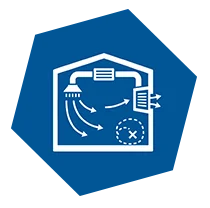
Airflow & Ventilation Assessment: Evaluation of how air moves through the space, including identification of dead zones, poor capture or ineffective ventilation.
By combining these methods, IAQ testing provides both a macro and micro view of air quality, helping facilities understand not just what’s in the air, but where it’s coming from and how it’s affecting operations.
Once IAQ data is collected, facilities can use these insights to take meaningful action, including:
- Establish baseline air quality targets
- Identify high-exposure areas or processes
- Prioritize system upgrades or adjustments
- Improve airflow and dust capture efficiency
- Track progress over time and validate improvements

Facility Air Quality Testing Experts
Indoor air quality testing is only as valuable as the expertise behind it. RoboVent brings a combination of technical knowledge and real-world application to every evaluation.
- Deep understanding of industrial airflows, particulate behavior and ventilation design
- Experience across manufacturing environments and dust-generating processes
- Ability to connect testing data to practical system improvements
- Integrated approach; from testing and analysis to system design and optimization
Rather than treating testing as a standalone service, RoboVent uses it as the foundation for long-term air quality system performance.

RELATED SERVICES
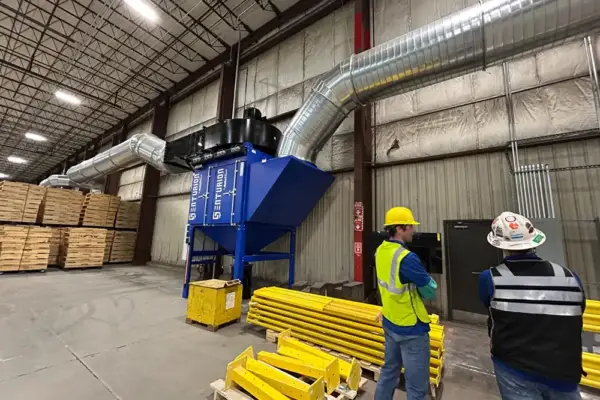
Facility Testing & Evaluation Services
Facility Testing & Evaluation Services Identify indoor air quality problems, improve ventil...
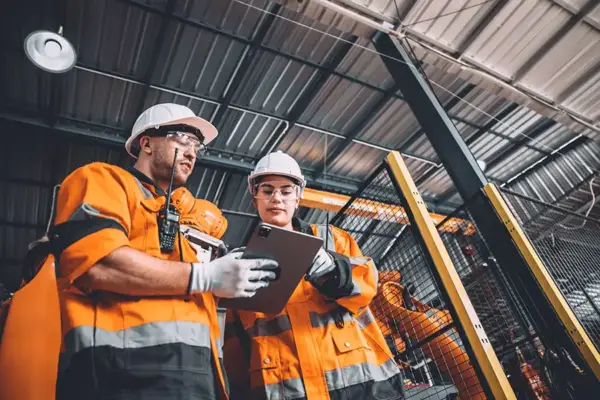
Dust Hazard Analysis (DHA) Support
Dust Hazard Analysis (DHA) Support Strengthen Your Dust Hazard Analysis with the Right Data and...
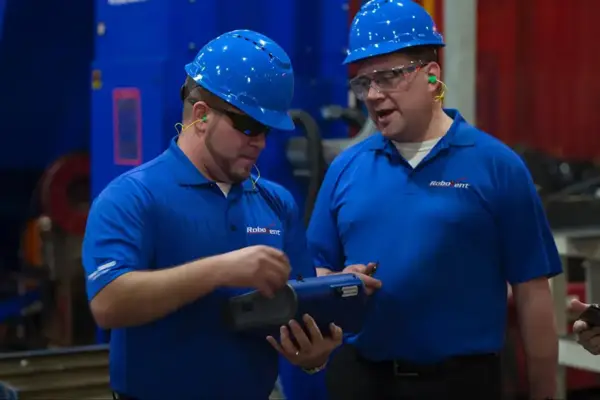
Indoor Air Quality Compliance
Indoor Air Quality Compliance Navigate Workplace Air Quality Regulations with Clarity and Confi...
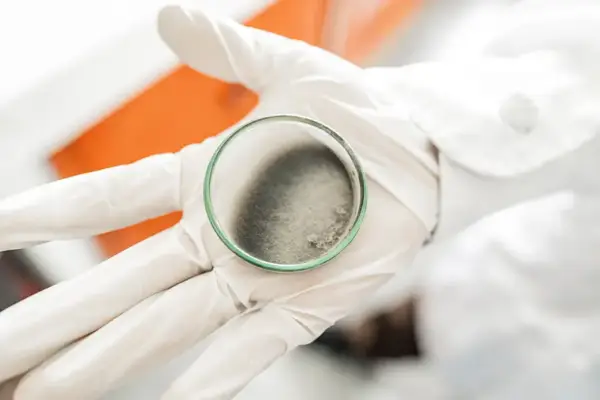
Dust Testing and Analysis
Dust Testing and Analysis Understanding Dust Composition Analysis and What It Means for Your Fa...
Frequently Asked Questions
IAQ Testing
What is indoor air quality testing in industrial facilities?
Indoor air quality testing involves measuring airborne particulate levels, analyzing exposure conditions and evaluating airflow throughout a facility to understand overall air quality performance. It provides a data-driven view of what’s in the air, where contaminants are concentrated and how effectively existing systems are managing them. This baseline is essential for identifying risks and prioritizing improvements.
How do I know if my facility needs IAQ testing?
If you cannot clearly quantify your air quality, compare it to industry benchmarks or understand employee exposure levels, testing is recommended. Visible dust or haze is often a late indicator of a larger issue, meaning conditions may already be impacting health, productivity or system performance. Facilities experiencing inconsistent airflow, employee complaints or frequent maintenance issues can also benefit from testing.
What’s the difference between ambient air testing and respiratory zone monitoring?
Ambient testing measures overall particulate levels across the facility, providing a broad view of general air quality conditions. Respiratory zone monitoring focuses on what workers are actually exposed to during their shifts, typically measured near the breathing zone over time. Together, these methods provide a more complete understanding of both facility-wide conditions and individual exposure.
How often should IAQ testing be performed?
Testing is recommended when installing new equipment, modifying processes, investigating air quality concerns or establishing a baseline. Periodic testing can also help track performance over time and validate whether improvements are delivering results. Many facilities incorporate testing into ongoing air quality management strategies rather than treating it as a one-time activity.
What happens after IAQ testing is complete?
The results are used to establish a baseline, identify problem areas and guide improvements to ventilation, filtration or dust collection systems. This may include system adjustments, maintenance actions or more comprehensive upgrades, depending on the findings. Ongoing testing can then be used to verify performance and ensure air quality goals continue to be met.
Contact Us
Need to schedule a repair or PM appointment? Just fill out the form below. Or call us at (888) 762-6836 to schedule an emergency repair.


