


FAQ CATEGORY: Hexavalent Chromium
Hexavalent Chromium
How is hexavalent chromium formed during welding?
Hexavalent chromium (Cr(VI)) forms when high temperatures oxidize chromium-containing metals during welding and other thermal processes. Stainless steel naturally contains chromium in its less harmful trivalent form (Cr(III)), but welding heat can transform it into toxic hex chrome fumes that may be inhaled by workers.
Several factors can increase hexavalent chromium exposure during welding, including:
- Welding method used: some processes create more fumes than others
- Chromium content of the metal: higher chromium content may increase exposure risk
- Contaminants or additional metals in the base material
- Welding temperature and duration
What processes generate hex chrome fumes?
While welding stainless steel is one of the most common sources of hex chrome exposure, other processes may also generate Cr(VI), including:
- Thermal cutting and smelting
- Chrome plating and thermal spraying
- Printing and chemical manufacturing
- Recycling chromium-containing materials
- Glass manufacturing using lead chromates
- Chemical manufacturing (especially dyes, paints and pigments)
What toxic substance is released when welding stainless steel?
Hexavalent chromium (Cr(VI))—also called hex chrome—is one of the primary toxic substances released when welding stainless steel. While stainless steel naturally contains chromium in a less harmful form called trivalent chromium (Cr(III)), the intense heat of welding can oxidize it into highly toxic hexavalent chromium fumes. These fumes may create serious health risks when inhaled and are a major concern for welders and employers.
Is chromium in stainless steel toxic?
Not inherently. Chromium in stainless steel is typically present as trivalent chromium (Cr(III)), which is not considered highly toxic in its original form. The danger occurs during high-heat processes such as welding, thermal cutting or grinding, when chromium may transform into hexavalent chromium (Cr(VI)), a known carcinogen associated with respiratory illness and other long-term health effects.
Does all stainless steel contain hexavalent chromium?
No. Stainless steel does not typically contain hexavalent chromium initially. However, most stainless steel alloys contain 10% to 30% chromium, which can be converted into hex chrome fumes during welding or thermal processing. This means nearly any stainless steel has the potential to create hexavalent chromium exposure risks when welded.
What other materials contain chromium?
Chromium is used in various industrial applications due to its anti-corrosive properties. It’s often used in paints, inks, and other surface coatings. Chromium is commonly found in:
- Paints and primers (especially in the automotive and aerospace industries)
- Dyes and pigments
- Leather tanning agents
- Chrome plating
- Anti-corrosion products
When chromium-containing materials are heated during welding, cutting, grinding and other thermal processes, dangerous hexavalent chromium can form.
What are the dangers of welding stainless steel?
One of the biggest welding stainless steel dangers is exposure to toxic weld fumes, particularly hexavalent chromium. Welders may also be exposed to manganese, nickel and other hazardous metal particulates depending on the base material and process. Without proper ventilation and weld fume control, long-term exposure can increase the risk of respiratory illness, organ damage and cancer.
What health problems can exposure to hexavalent chromium cause?
Exposure to hexavalent chromium can cause a wide range of health concerns depending on exposure level and duration. Short-term exposure may lead to coughing, wheezing, throat irritation, skin irritation or eye discomfort. Long-term exposure may contribute to:
- Lung damage and chronic respiratory illness
- Occupational asthma and chronic bronchitis
- Nasal irritation and tissue damage
- Kidney and liver damage
- Reproductive concerns
- Lung, nasal and sinus cancers
What are hexavalent chromium exposure symptoms?
Hexavalent chromium exposure symptoms often affect the respiratory system first, though some workers may not experience immediate symptoms.
Common symptoms may include:
- Coughing or wheezing
- Runny or itchy nose
- Throat irritation
- Skin rashes or contact dermatitis
- Eye irritation
It is important to remember that many workers exposed to unsafe levels of hex chrome do not show immediate symptoms. The absence of symptoms does not mean exposure is safe.
Prolonged exposure to hexavalent chromium can result in what conditions?
Prolonged exposure to hexavalent chromium can result in serious long-term health consequences, including:
- Lung cancer
- Nasal and sinus cancers
- Chronic respiratory illness
- Permanent skin damage
- Reduced kidney function
- Liver damage
- Reproductive and developmental concerns
Because hexavalent chromium exposure is cumulative, repeated low-level exposure may still create long-term health risks.
What is the OSHA hexavalent chromium PEL?
The OSHA hexavalent chromium PEL (Permissible Exposure Limit) for general industry is:
- 5 µg/m³ over an 8-hour time-weighted average (TWA)
OSHA also establishes an Action Level of 2.5 µg/m³, which may trigger additional monitoring and protective measures. Employers are responsible for ensuring worker exposure remains below these limits through engineering controls, air monitoring and protective measures.
What respiratory protection is used for hexavalent chromium?
Respiratory protection for hexavalent chromium may be necessary if engineering controls alone cannot adequately reduce exposure. Depending on the exposure level, protection may include:
- NIOSH-approved half-mask or full-face respirators
- Powered air-purifying respirators (PAPRs)
However, OSHA and industrial hygiene best practices prioritize engineering controls first, meaning weld fume extraction and ventilation should be implemented before relying on PPE alone.
How can employers reduce hexavalent chromium exposure?
The most effective way to reduce hexavalent chromium exposure is through source capture and weld fume control systems designed to keep fumes out of the breathing zone.
Common control methods include:
- Fume extraction arms
- Fume extraction guns/torches
- Backdraft plenums
- Welding tables with integrated extraction
- Industrial ventilation systems
- Ambient air filtration as secondary control
Routine air sampling and exposure testing are also important to confirm compliance with OSHA limits.
How do employers test for hexavalent chromium exposure?
The most reliable way to evaluate worker exposure is through personal air sampling in the welder’s breathing zone. During testing, a small sampling device is clipped near the welder’s collar or lapel to collect airborne contaminants during work activities. Samples are then analyzed in a laboratory to determine exposure levels and confirm compliance with the OSHA hexavalent chromium PEL.
Is ambient air filtration enough for stainless steel welding?
Usually not. Ambient air filtration should not be the primary method of controlling hex chrome exposure during stainless steel welding, because it does not prevent fumes from entering the welder’s breathing zone. Source capture methods that collect fumes at or near the point of generation are generally the preferred approach. Ambient filtration may still be valuable as a secondary layer of protection.
How do I reduce exposure to hexavalent chromium (hex chrome) in stainless steel weld fumes?
Reducing hexavalent chromium exposure starts with controlling weld fumes before they reach the breathing zone. Because hex chrome is a highly toxic byproduct of welding stainless steel, employers should prioritize engineering controls and process improvements before relying on PPE alone.
Key ways to reduce exposure include:
- Improve the welding process: changes in materials or welding wire (such as switching from flux-core to solid wire) may reduce weld fume generation.
- Use source capture systems: fume guns, backdraft tables and extraction arms help capture hazardous fumes close to the source. Robotic welding cells should be enclosed whenever possible.
- Add ambient air filtration: while not a standalone solution, ambient systems can help reduce lingering fumes throughout a facility.
- Use PPE when necessary: if exposure remains high, respirators such as powered air-purifying respirators (PAPRs) may help protect workers.
Because OSHA considers PPE a last resort, employers should first implement effective weld fume extraction and ventilation systems to help maintain exposure levels below the OSHA hexavalent chromium PEL.
Should PPE be used when welding stainless steel?
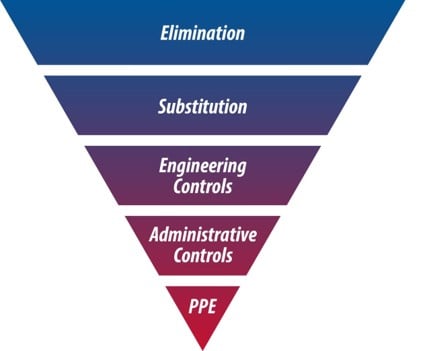
If engineering controls cannot adequately control fumes from stainless steel welding, it may be necessary to provide welders with appropriate respirators to reduce exposure to hexavalent chromium. This might range from disposable N95/KN95 masks to powered air-purifying respirators (PAPRs), depending on the level of exposure. However, keep in mind that respirators should not be the first or only line of defense from hex chrome in welding fumes. According to the hierarchy of controls, engineering controls such as air filtration and ventilation must be implemented before relying on PPE.
FAQ CATEGORIES
- About Dust Collector Cartridge Filters (5)
- Air Quality Regulations (14)
- Applications (8)
- Battery (4)
- Building (5)
- Care and Maintenance of Dust Collector Cartridge Filters (7)
- Combustible Dusts and Explosion Safety (19)
- DHA (6)
- Downdraft Tables (6)
- DuroRoom (8)
- Dust Collector Preventive Maintenance (9)
- Dust Testing and Analysis (6)
- Extraction Arm (5)
- Facility Testing (5)
- Filtration Basics (8)
- Fire Safety (4)
- FlexPro™ High-Vacuum Series (5)
- Fume Guns (5)
- Health & Safety (8)
- Hexavalent Chromium (17)
- IAQ Testing (5)
- ICE (8)
- Indoor Air Quality Compliance (4)
- Industrial Hoods (14)
- Industrial Ventilation System Design (8)
- NFPA (7)
- Portable Weld Fume Extractors (6)
- Regulations & Compliance (12)
- Repair Services (7)
- Replacement Cartridge Dust Collector Filters (4)
- Retrofitting (5)
- Service Contracts (5)
- Streamline Hood™ (7)
- System Audit (8)
- System Design (39)
- System Installation (7)
- System Optimization (6)
- Systems Design and Engineering (5)
- Types of Cartridge Air Filters (4)
- Weld Fume Extractors (4)
- Welding Booths (5)
- Welding Table (5)
- Worker Health and Safety (12)


